Home /
Blog /
The Role of Yeast Strains in Shaping Indian Single Malt Whisky Flavour
Posted on 15 June 2026
The Role of Yeast Strains in Shaping Indian Single Malt Whisky Flavour
Introduction: The Hidden Architect of Flavour
When discussing Indian single malt, most attention goes to barrels, aging, or distillation. Yet, one of
the most critical contributors to flavour works quietly at the very beginning of the process—yeast.
Yeast is often seen as a functional element in single malt whisky, responsible for converting sugars into
alcohol. However, its role goes far beyond that. It actively shapes aroma, flavour, and structure, making
it one of the most influential components in defining the character of single malt whiskey.
For producers of single malt, yeast is not just an ingredient—it is a tool for creating distinction.
Understanding Yeast in Whisky Production
The Role of Fermentation
In the production of Indian single malt whisky, yeast is introduced during fermentation to:
- Convert sugars into alcohol
- Generate heat and activity
- Initiate flavour development
Beyond Alcohol Creation
While alcohol production is essential, yeast also creates:
- Esters (fruity and floral compounds)
- Higher alcohols
- Aromatic molecules
These compounds form the foundation of flavour in single malt whisky.
What Are Yeast Strains?
Variations in Yeast
Not all yeast behaves the same. Different strains used in single malt whiskey:
- Ferment at different speeds
- Produce varying flavour compounds
- Respond differently to temperature
Strategic Selection
Producers of Indian single malt carefully choose yeast strains to:
- Achieve desired flavour profiles
- Maintain consistency
- Control fermentation outcomes
How Yeast Shapes Flavour
Creation of Esters
Esters are key flavour compounds in single malt whisky, contributing:
- Fruity notes
- Light floral characteristics
- Bright aromatic elements
Building Complexity
Different yeast strains allow single malt to:
- Develop layered profiles
- Show subtle variation
- Achieve depth
Impact on Aroma
Defining the Nose
The aroma of Indian single malt whisky is significantly influenced by yeast:
- Fresh, light notes
- Rich, developed scents
- Background complexity
Sensory Variation
By changing yeast strains, producers of single malt whiskey can:
- Alter aroma intensity
- Shift flavour direction
- Influence perception
Influence on Texture and Structure
Mouthfeel Contribution
Yeast affects how single malt whisky feels by:
- Influencing fermentation by-products
- Affecting alcohol composition
- Contributing to body
Perceived Smoothness
Different yeast strains can make Indian single malt feel:
- Lighter or heavier
- Softer or sharper
- More rounded
Interaction with Other Production Elements
Working with Raw Materials
In single malt, yeast interacts with:
- Barley composition
- Water characteristics
- Fermentation conditions
Evolution During Maturation
As single malt whisky ages, yeast-derived compounds:
- Transform
- Integrate with cask influence
- Contribute to final complexity
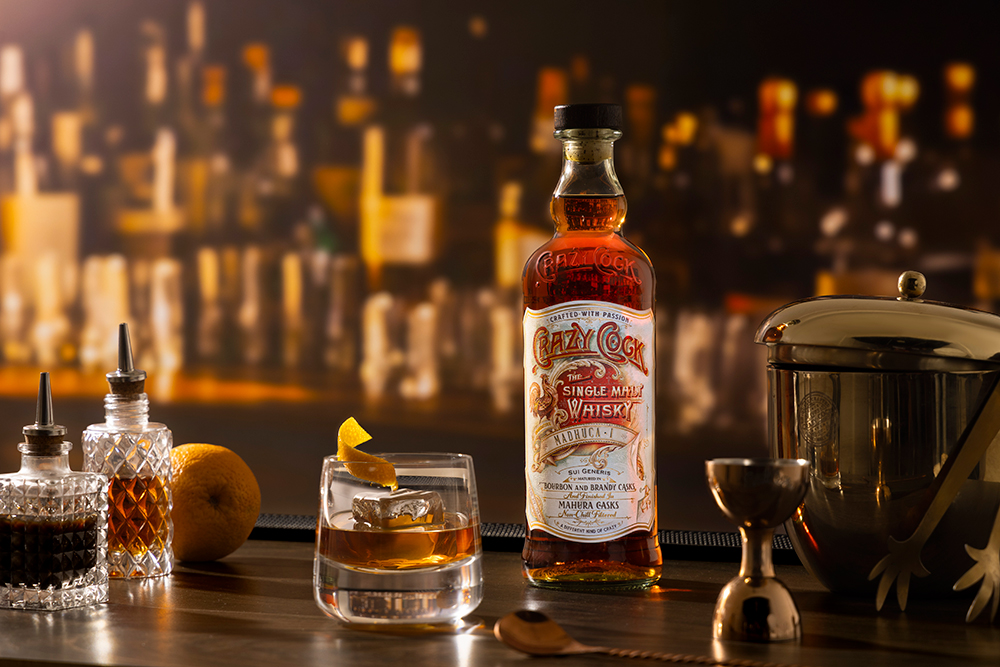
Crazy Cock Single Malt Whisky
Crazy Cock and Fermentation Precision
Controlled Fermentation
Crazy Cock ensures its Indian single malt whisky benefits from:
- Carefully selected yeast strains
- Controlled fermentation environments
- Consistent flavour development
Expression Across the Range
In expressions like Madhuca I, Madhuca II, Madhuca III, Dhua, and Rare, yeast contributes to:
- Distinct profiles
- Balanced structure
- Consistent identity
Why Yeast Is Often Overlooked
Focus on Visible Elements
Consumers tend to focus on:
Hidden Complexity
However, yeast in single malt whisky:
- Shapes early flavour
- Influences final profile
- Defines foundational character
The Future of Yeast in Indian Single Malt
Increased Experimentation
As the category evolves, Indian single malt producers may:
- Explore diverse yeast strains
- Experiment with fermentation styles
- Develop unique flavour profiles
Growing Consumer Awareness
Consumers of single malt whiskey are becoming:
- More informed
- More curious
- More interested in process
Conclusion: Small Component, Major Impact
Yeast may be one of the smallest elements in the production of Indian single malt, but its impact is
significant.
From shaping aroma to influencing flavour and texture, yeast defines the foundation of single malt
whisky. It works quietly during fermentation, yet its effects carry through every stage of production.
Because in crafting exceptional single malt whiskey, even the smallest details make the biggest
difference.