Crazy Cock

The Science of Mouthfeel:

Why Some Indian Single Malt Whiskies Feel Richer Than Others

Home / Blog / The Science of Mouthfeel: Why Some Indian Single Malt Whiskies Feel Richer Than Others
Posted on 05 June 2026

The Science of Mouthfeel: Why Some Indian Single Malt Whiskies Feel Richer Than Others

Introduction: Beyond Taste and Aroma

When experiencing single malt whisky, most attention is given to aroma and flavour. However, another crucial dimension often goes unnoticed—mouthfeel.

Mouthfeel defines how a whisky feels on the palate: its weight, texture, and structure. In Indian single malt, this aspect can vary significantly, with some expressions feeling light and clean while others feel rich and full-bodied.

Understanding the science behind mouthfeel helps explain why certain single malt whiskey expressions feel more luxurious, more complete, and more memorable.

What Is Mouthfeel in Whisky?

Defining the Concept

Mouthfeel in single malt refers to:

  • Texture on the palate
  • Perceived weight
  • Coating sensation

Why It Matters

In Indian single malt whisky, mouthfeel influences:

  • Perception of quality
  • Drinking comfort
  • Overall experience

The Role of Alcohol Structure

Ethanol and Texture

Alcohol itself contributes to how single malt whiskey feels:

  • Higher alcohol can create warmth
  • Balanced alcohol creates smoothness
  • Poor integration leads to harshness

Integration Is Key

Well-balanced Indian Single Malt ensures:

  • Alcohol is present but not overpowering
  • Texture feels structured
  • The experience remains smooth

Also Read The Fourth Generation Whisky Maker: How a Family Legacy Built India's Most Inquisitive Indian Single Malt Whisky

Influence of Fermentation Compounds

Formation of Texture

During fermentation, single malt whisky develops:

  • Higher alcohols
  • Esters
  • Oils

Impact on Mouthfeel

These compounds contribute to single malt by:

  • Adding weight
  • Creating richness
  • Enhancing texture

Distillation and Its Effect on Body

Retaining or Removing Compounds

Distillation determines how much texture is retained in Indian Single Malt:

  • More refinement → lighter body
  • More retention → fuller body

Precision in Cuts

Careful distillation ensures single malt whisky:

  • Maintains desirable oils
  • Avoids harsh elements
  • Achieves balance

The Role of Oils and Residual Compounds

Natural Oils

Certain oils present in single malt whiskey contribute to:

  • Viscosity
  • Coating sensation
  • Richness

Mouthfeel Impact

These elements make Indian Single Malt feel:

  • Fuller
  • Smoother
  • More layered

Maturation and Texture Development

Interaction Over Time

As single malt whisky matures, interaction with casks:

  • Softens harsh edges
  • Integrates flavours
  • Enhances texture

Building Depth

This process helps Indian Single Malt develop:

  • Rounded body
  • Smooth transitions
  • Rich mouthfeel

Water and Dilution

Adjusting Balance

Water affects single malt by:

  • Opening up compounds
  • Reducing alcohol sharpness
  • Enhancing smoothness

Controlled Dilution

Proper dilution ensures single malt whisky:

  • Retains structure
  • Feels balanced
  • Remains drinkable

Also Read Why Crazy Cock Won Best Indian Single Malt at IWS Awards 2026 — And What It Means for Indian Single Malt Whisky

Mouthfeel vs Flavor

Two Separate Dimensions

While flavour describes taste, mouthfeel defines:

  • Physical sensation
  • Texture
  • Weight

Combined Experience

In Indian Single Malt, both work together to:
  • Create complexity
  • Enhance perception
  • Deliver completeness
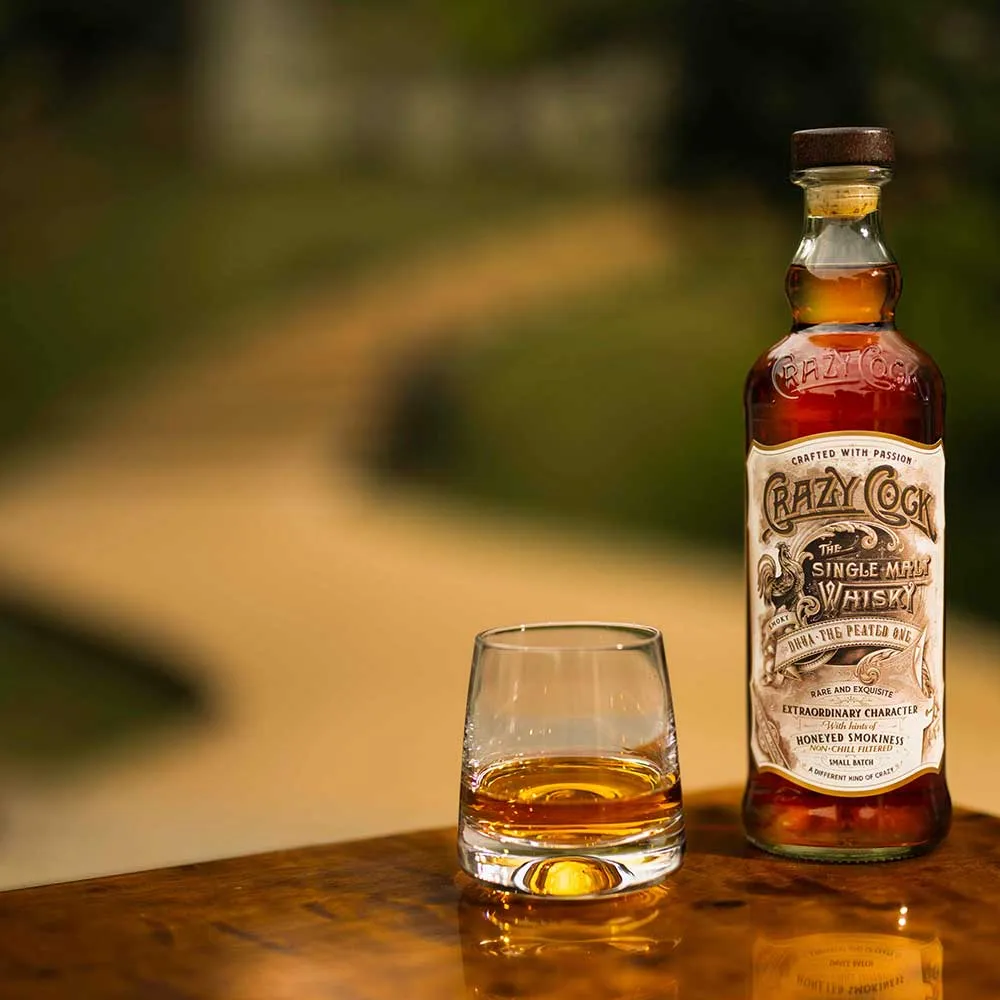
Crazy Cock - Indian single malt whisky
Crazy Cock Single Malt Whisky

Crazy Cock and Texture Balance

Structured Mouthfeel

Crazy Cock’s Indian single malt reflects:

  • Balanced texture
  • Controlled body
  • Smooth integration

Consistency Across Expressions

Crazy Cock - Indian single malt whisky
Crazy Cock Single Malt Whisky

Expressions such as Madhuca I, Madhuca II, Madhuca III, Dhua, and Rare demonstrate how single malt whiskey can vary in richness while maintaining a consistent standard of mouthfeel.

Why Some Whiskies Feel Richer

Key Factors

Richer single malt whisky typically results from:

  • Longer or controlled fermentation
  • Balanced distillation
  • Effective maturation

Perception of Luxury

Fuller-bodied Indian Single Malt is often perceived as:

  • More premium
  • More complex
  • More satisfying

The Future of Mouthfeel in Indian Single Malt

Increased Awareness

As consumers become more informed, single malt appreciation will include:

  • Texture evaluation
  • Mouthfeel comparison
  • Deeper understanding

Greater Refinement

Producers will continue to refine single malt whisky by:

  • Controlling texture
  • Enhancing richness
  • Maintaining balance

Conclusion: A Texture You Can Taste

Mouthfeel is a defining characteristic of single malt whisky that goes beyond flavour and aroma.

For Indian Single Malt, it is the result of fermentation, distillation, and maturation working together to create a balanced, rich experience. It determines how a whisky feels, how it lingers, and how it is remembered.

Because a great single malt whiskey is not just tasted—it is felt.