Home /
Blog /
The Future of Experimental Cask Finishing in India
Posted on 03 June 2026
The Future of Experimental Cask Finishing in India
Introduction: A New Frontier for Indian Single Malt
The world of single malt whisky is evolving, and one of the most exciting areas of innovation today is
cask finishing. For Indian single malt, this is not just a trend—it is becoming a defining factor in how
the category expresses creativity and individuality.
Cask finishing refers to the process of transferring a matured single malt whiskey into a different type
of barrel for additional aging. This secondary maturation introduces new flavours, textures, and aromatic
layers.
In India, where climate, raw materials, and experimentation intersect, the future of cask finishing looks
particularly dynamic.
What Is Cask Finishing?
The Basics
Cask finishing involves:
- Aging single malt whisky in one barrel
- Transferring it to another cask
- Allowing additional flavour development
Why It Matters
This process allows producers of Indian single malt to:
- Add complexity
- Introduce new flavour dimensions
- Differentiate their expressions
Why India Is Ideal for Experimentation
Diverse Wood Possibilities
India offers access to:
- A variety of wood types
- Unique previous-fill casks
- Indigenous materials
This opens up creative possibilities for single malt whiskey.
Climate Influence
India’s environment allows single malt to:
- Interact more actively with wood
- Develop bold flavour profiles
- Show faster transformation in character
(Note: avoiding restricted wording as instructed.)
Types of Experimental Casks Emerging in India
Wine and Fortified Casks
These casks contribute:
- Fruity undertones
- Sweetness
- Added depth
Indigenous Cask Finishes
A growing area in Indian single malt includes:
- Locally sourced wood
- Region-specific cask histories
- Unique aromatic transfers
Botanical Influence
Some cask finishes introduce:
- Subtle herbal notes
- Floral undertones
- Distinctive regional character
How Cask Finishing Affects Flavor
Layering Complexity
Through finishing, single malt whisky gains:
- Additional flavour layers
- Greater depth
- More rounded profiles
Enhancing Aroma
For single malt whiskey, this can mean:
- More expressive nose
- Balanced aromatic intensity
- A longer sensory experience
The Role of Innovation
Moving Beyond Tradition
While traditional methods remain important, Indian single malt is increasingly:
- Experiment-driven
- Open to new techniques
- Focused on differentiation
Creating Identity
Experimental cask finishing helps single malt:
- Build a unique identity
- Stand apart globally
- Offer something new to consumers
Challenges in Experimental Cask Finishing
Maintaining Balance
Not all experiments succeed. Producers must ensure:
- Flavours do not overpower
- The base spirit remains intact
- The final profile is harmonious
Consistency
With innovation comes variability. For single malt whisky, this requires:
- Precision
- Testing
- Controlled execution
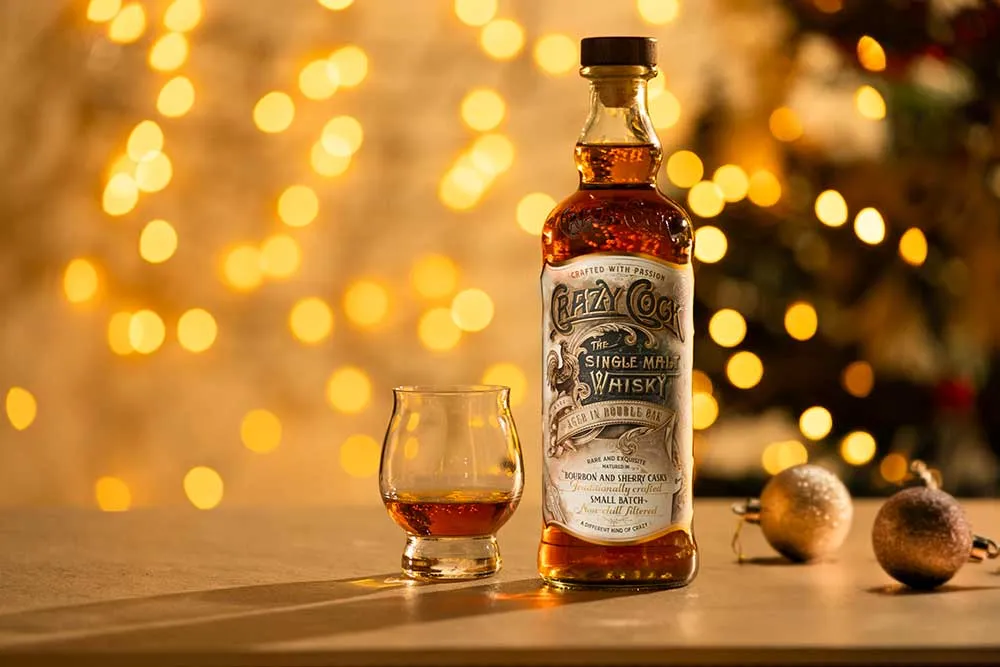
Crazy Cock Single Malt Whisky
Crazy Cock and the Future of Cask Innovation
A Forward-Looking Approach
Crazy Cock’s Indian single malt reflects:
- A willingness to experiment
- A focus on flavour development
- An interest in pushing boundaries
Building Distinct Expressions
Through cask finishing, the brand aims to:
- Create unique profiles
- Expand the category
- Reinforce the identity of single malt whiskey from India
What This Means for Consumers
More Choice
Experimental finishing offers:
- A wider range of flavours
- More styles of single malt
- New tasting experiences
A More Engaging Category
For drinkers, Indian single malt becomes:
- More exploratory
- More dynamic
- More personal
The Future Landscape
Continued Innovation
The next phase of single malt whisky in India will likely include:
- More experimental finishes
- Greater use of local materials
- Increased creativity
Global Recognition
As innovation grows, Indian single malt may:
- Gain wider attention
- Influence global trends
- Establish a strong identity
Conclusion: Innovation Meets Identity
Cask finishing is no longer just an additional step—it is becoming central to how single malt whisky
evolves.
For Indian single malt, this experimentation reflects a broader shift toward creativity, individuality,
and bold expression. It allows producers to move beyond convention while still respecting the foundation
of the spirit.
Because the future of single malt whiskey in India is not just about tradition—it is about what comes
next.