Crazy Cock

The Influence of Yeast Strains on Indian Single Malt Whisky Flavor

Home / Blog / The Influence of Yeast Strains on Indian Single Malt Whisky Flavor
Posted on 12 June 2026

The Influence of Yeast Strains on Indian Single Malt Whisky Flavor

Introduction: The Invisible Force Behind Flavor

When people think about Indian single malt, they often focus on visible elements—barrels, aging, or even the distillation process. However, one of the most critical contributors to flavour operates quietly and often goes unnoticed: yeast.

Yeast plays a foundational role in shaping single malt whisky. While its primary function is to convert sugars into alcohol, it also creates a wide range of flavour compounds that define the character of the spirit.

For single malt whiskey, yeast is not just a technical requirement—it is a creative tool. The choice of yeast strain can significantly influence aroma, taste, and overall complexity, making it a key factor in crafting distinctive single malt expressions.

Understanding the Role of Yeast in Whisky

Fermentation as the Starting Point

In the production of Indian single malt whisky, yeast is introduced during fermentation to:

  • Convert sugars into alcohol
  • Generate heat and activity
  • Begin flavour development

More Than Alcohol Production

While fermentation creates the alcohol base, yeast also produces:

  • Esters (fruity notes)
  • Alcohol compounds
  • Aromatic elements

These compounds form the early flavour structure of single malt whisky.

Also Read Who Should Try Madhuca 1? A Guide to Floral & Mahua-Based Spirits

What Are Yeast Strains?

Variations in Yeast

Not all yeast is the same. Different strains used in single malt whiskey:

  • Behave differently during fermentation
  • Produce varied flavour compounds
  • Influence aroma and taste

Controlled Selection

Producers of Indian single malt carefully select yeast strains to:

  • Achieve specific profiles
  • Maintain consistency
  • Enhance character

How Yeast Influences Flavor

Creation of Esters

Yeast produces esters, which contribute to single malt whisky:

  • Fruity aromas
  • Floral notes
  • Bright characteristics

Building Complexity

Different yeast strains allow single malt to:

  • Develop layered flavours
  • Show variation
  • Achieve depth

Impact on Aroma

Defining the Nose

The aroma of Indian single malt whisky is heavily influenced by yeast:

  • Light, fresh notes
  • Rich, developed scents
  • Subtle background elements

Sensory Variation

Changing yeast strains in single malt whiskey can:

  • Alter aroma intensity
  • Shift flavour direction
  • Influence perception

Influence on Texture and Mouthfeel

Structural Contribution

Yeast indirectly affects how single malt whisky feels by:

  • Influencing fermentation by-products
  • Affecting alcohol composition
  • Contributing to body

Perceived Smoothness

Different yeast strains can make Indian single malt feel:

  • Lighter
  • Richer
  • More rounded

Balancing Yeast with Other Elements

Interaction with Raw Materials

In single malt, yeast works alongside:

  • Barley
  • Water
  • Production methods

Integration with Maturation

As single malt whisky ages, yeast-derived compounds:
  • Evolve
  • Integrate with wood influence
  • Contribute to final complexity
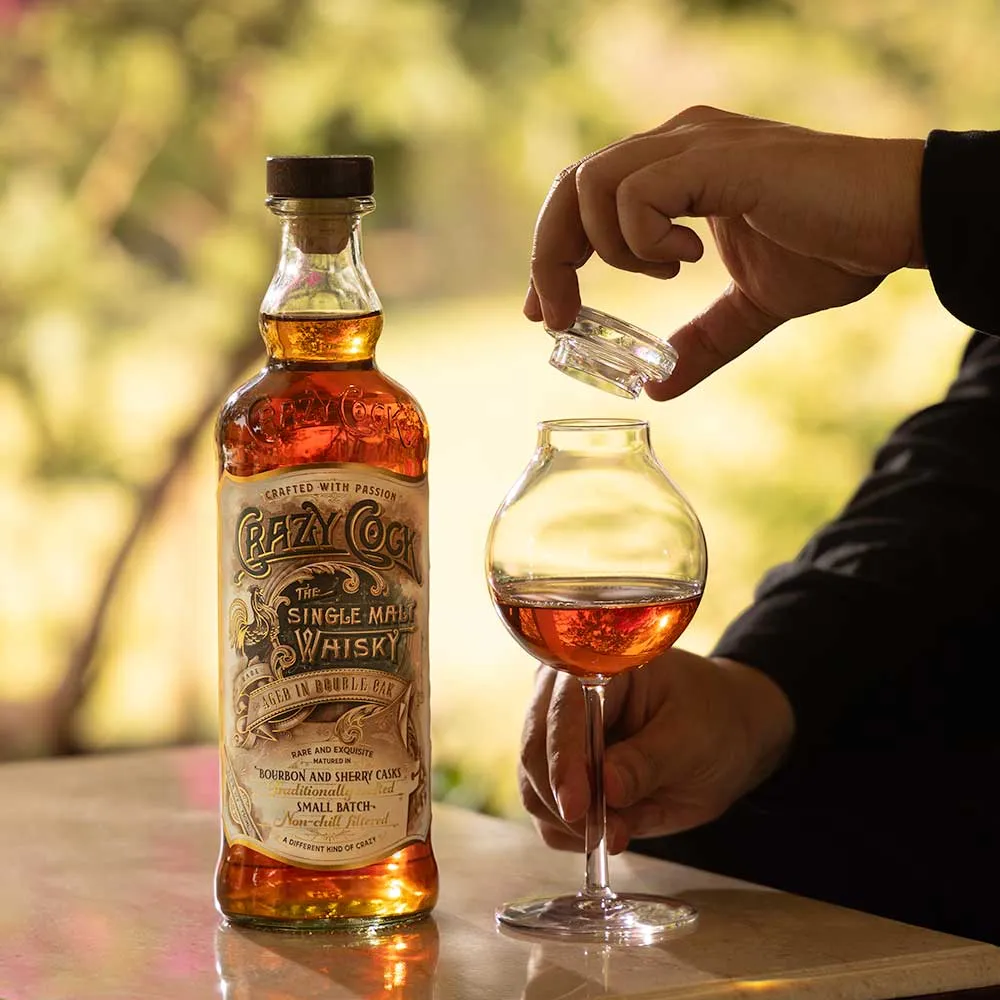
Crazy Cock - Indian single malt whisky
Crazy Cock Single Malt Whisky

Crazy Cock and Fermentation Precision

Controlled Fermentation

Crazy Cock ensures its Indian single malt whisky benefits from:

  • Carefully selected yeast strains
  • Controlled fermentation conditions
  • Consistent flavour outcomes

Expression Across the Portfolio

In expressions like Madhuca I, Madhuca II, Madhuca III, Dhua, and Rare, yeast plays a role in shaping the individuality of each single malt while maintaining overall consistency.

Also Read What Are Mahura Casks? The Story Behind Mahua Cask Finishing

Why Yeast Is Often Overlooked

Less Visible Than Aging

Consumers tend to focus on:

  • Cask types
  • Age statements
  • Finishing techniques

Hidden Complexity

However, yeast in single malt whisky:

  • Shapes initial flavour
  • Influences final profile
  • Defines early structure

The Future of Yeast in Indian Single Malt

Increased Experimentation

As the category evolves, producers of Indian single malt may:

  • Explore new yeast strains
  • Experiment with fermentation styles
  • Develop unique profiles

Greater Awareness

Consumers of single malt whiskey are becoming more:

  • Informed
  • Curious
  • Interested in production details

Conclusion: Small Element, Big Impact

Yeast may be one of the smallest components in the production of Indian single malt, but its impact is significant.

From shaping aroma to influencing flavour and texture, yeast defines the foundation of single malt whisky. It works quietly during fermentation, yet its effects carry through every stage of production.

Because in crafting great single malt whiskey, even the smallest elements can make the biggest difference.