-
Heritage Edition
-
Media
In the production of Indian single malt, distillation is where the spirit truly begins to take shape. While fermentation creates the base, it is during distillation that the final character is defined.
At the center of this process lies one of the most important decisions a distiller makes—how to separate the spirit into different portions, commonly known as heads, hearts, and tails. These are collectively referred to as spirit cuts.
For single malt whisky, understanding these cuts is essential to understanding how flavour, aroma, and texture are developed. In single malt whiskey, these distinctions determine what is refined, what is removed, and what ultimately defines the spirit.
As the fermented liquid is heated during the production of Indian single malt whisky, different compounds evaporate at different temperatures. This results in three main fractions:
Each fraction in single malt whisky contains different compounds, and not all are desirable. Proper separation ensures that single malt maintains:
The heads in single malt whiskey are:
In single malt whisky, heads are typically:
The heart of Indian single malt is:
This portion forms the base of single malt whisky, delivering:
The tails in single malt whiskey are:
In single malt whisky, small portions of tails may be:
Each cut contributes differently to Indian single malt whisky:
By controlling cuts, producers of single malt can:
In single malt whisky, spirit cuts influence:
The inclusion or exclusion of certain cuts in Indian single malt affects:
To ensure consistency, single malt whiskey producers:
Consistency in spirit cuts ensures that single malt whisky:
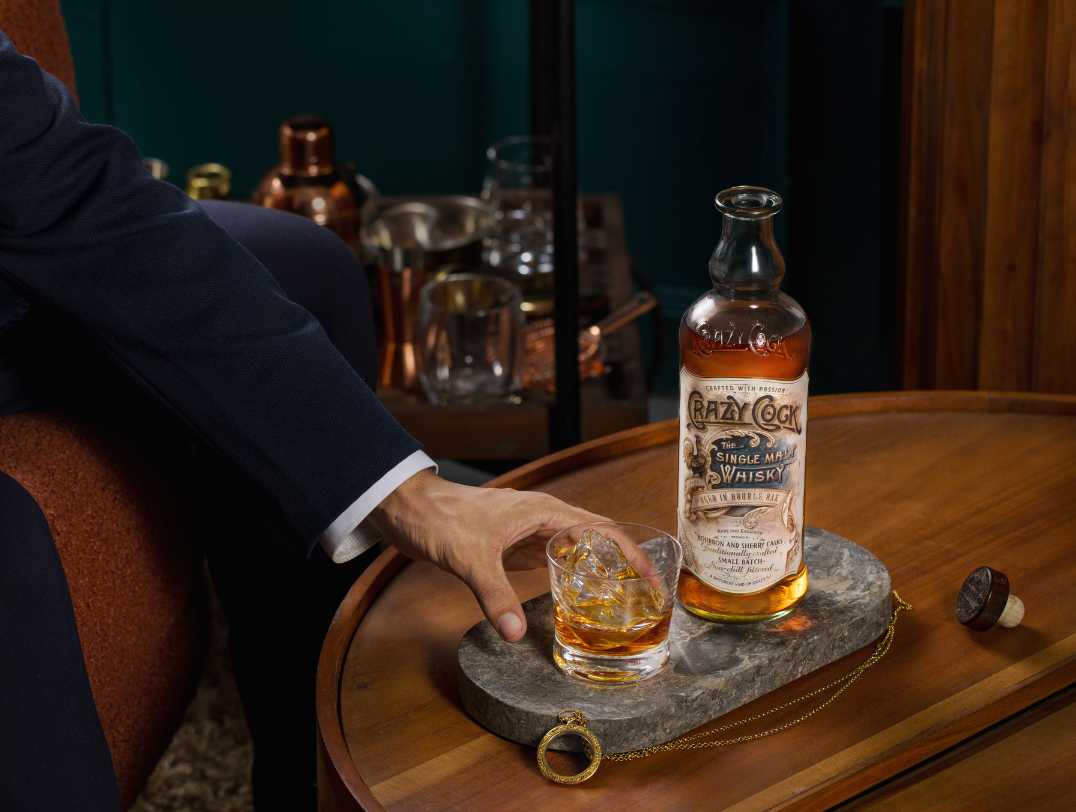
Crazy Cock’s Indian single malt whisky reflects:
In Madhuca I, Madhuca II, Madhuca III, Dhua, and Rare, the handling of heads, hearts, and tails contributes to:
While spirit cuts in single malt whisky rely on technical understanding, they also involve:
Each producer of Indian single malt develops:
Factors affecting spirit cuts in single malt whiskey include:
Maintaining quality in single malt whisky requires:
As Indian single malt whisky evolves, distillation will:
This will allow single malt whisky to:
Spirit cuts are at the heart of distillation in Indian single malt. They determine what becomes part of the final product and what is left behind.
In single malt whisky, the careful separation of heads, hearts, and tails ensures balance, smoothness, and complexity. For single malt whiskey, this process transforms raw distillate into a refined and consistent spirit.
Because in whisky making, what you choose to keep defines what you create.