-
Heritage Edition
-
Media
India’s whisky story is no longer about imitation. It’s about evolution.
For decades, Indian spirits were boxed into two extremes: deeply traditional local brews like mahua, or mass-market whisky that leaned heavily on blending. What’s happening now sits right in the middle — a confident, premium category that respects heritage but speaks a global language, contributing to India’s evolving premium single malt category.
To understand where Indian single malt is going, you have to start where it all began.
India has always had a strong drinking culture — just not always a globally recognized one.

At the grassroots level, spirits like mahua, derived from the Madhuca longifolia, were widely consumed across local belts. These weren’t commercial products. They were cultural staples — made locally, shared socially, and rarely standardized.
Then came the rise of Indian whisky.
But early “Indian whisky” often meant molasses-based blends, designed for volume, not craft. The premium narrative didn’t really exist.
That changed in the last decade.
Distillers began focusing on:
What this really means is simple: India stopped trying to replicate Scotch and started building its own identity.
Indian single malt isn’t a novelty anymore. It’s a serious contender.
There are a few reasons behind this shift:
India’s tropical climate accelerates maturation. Whisky ages faster, interacts more intensely with the barrel, and develops bold, layered profiles in a shorter time.
Unlike Scotch, which often leans on regional styles, Indian single malts tend to be:
Drinkers worldwide are moving beyond traditional categories. They’re actively looking for new origins, new ingredients, and new stories.
India delivers on all three.
The result? Indian single malts are no longer “emerging.” They’re establishing.
This is where Crazy Cock enters the conversation — not as a follower, but as a brand shaping how Indian single malt is perceived.
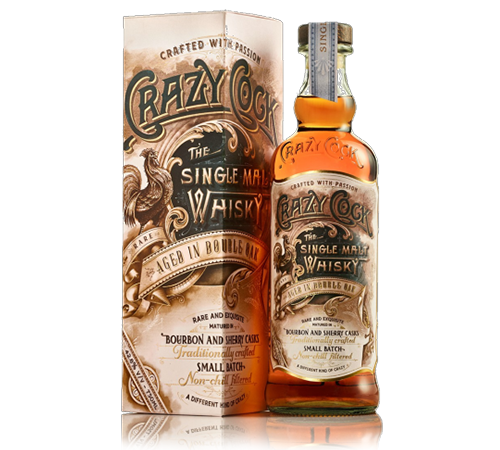
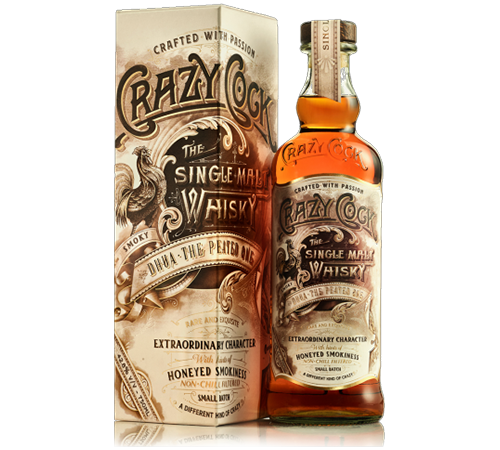
Expressions like Crazy Cock Rare and Crazy Cock Dhua are built around a clear idea: Indian whisky should taste like it belongs here.
What sets them apart:
Rare leans into smoothness and approachability — something you can sip without overthinking.
Dhua, on the other hand, introduces a more complex, slightly smoky character. It pushes the boundaries of what people expect from Indian single malt.
Together, they represent a broader shift: Indian whisky is no longer trying to prove itself. It’s defining itself.
Now here’s where things get interesting.
Madhuca expressions draw inspiration from the same Madhuca longifolia that gives us mahua — but they’re crafted using techniques closer to single malt whisky production.
This creates a unique intersection:
Think of it as a parallel track to Indian single malt.
While barley-based whiskies like those from Crazy Cock build India’s credibility in the global whisky market, Madhuca-based spirits expand the category itself.
They’re not competing. They’re complementing.
Even as Indian single malt rises, mahua remains foundational.
Here’s the thing — global recognition isn’t just about quality. It’s about identity.
Mahua offers something whisky alone cannot:
Ignoring mahua would mean losing a key part of India’s spirits DNA.
In fact, its relevance is increasing, not fading.
As consumers look for authenticity, mahua becomes a strategic advantage:
Indian single malt is shaped by climate, which accelerates aging and intensifies flavor. It often results in a richer, bolder profile compared to many Scotch whiskies.
Yes. Crazy Cock focuses on Indian single malt expressions that reflect local conditions and evolving consumer preferences.
Mahua is made from fermented flowers of the Madhuca longifolia, while whisky is typically made from grains like barley, corn, or rye. The base ingredient drives a completely different flavor experience.
Not strictly. They borrow techniques from whisky-making but are based on mahua, making them a distinct category.
Because it offers a combination of quality production, unique climate-driven maturation, and a cultural narrative that stands apart from traditional whisky regions.