-
Heritage Edition
-
Media
For a long time, Indian whisky was mostly associated with carefully crafted spirits. But that’s changed. Over the past decade, Indian single malts have stepped up in a big way, earning global recognition and changing how the world sees our whisky.
So what really defines a good quality whisky in India? Is it the ingredients? The stills? The way it’s aged? Let’s break it down- one sip at a time.
It all begins with the barley. India’s top single malts often use six-row barley grown in regions like Rajasthan and the Himalayan foothills. It’s higher in protein and delivers a fuller body compared to the barley used in Scotch.
Why does this matter?

Crazy Cock Single Malt Whisky is a good example - it’s made with high-quality local barley and delivers bold character in every bottle.
2. Copper Pot Stills: Old-School Distilling That Still Works
A good whisky doesn’t just rely on ingredients. The way it’s distilled matters just as much. Traditional copper pot stills are still the gold standard. They remove impurities, retain essential oils, and help the spirit develop a smoother, more layered profile.
What copper stills bring to the table:
Crazy Cock sticks to this method. No shortcuts, just craftsmanship.
Here’s the thing about aging whisky in India - our warmer climate accelerates the maturation process. What takes 15–20 years in Scotland can be done in 5–7 years here without compromising quality.
What you get depends a lot on the type of cask used:

Crazy Cock Rare is matured in both bourbon and sherry barrels, giving it a rounded, complex flavor with a smooth finish.
Smoke isn’t just for Scotch. Indian whisky makers are experimenting with peated whiskies, and it’s paying off.
If you’re into smoky drams, here’s what to look for:
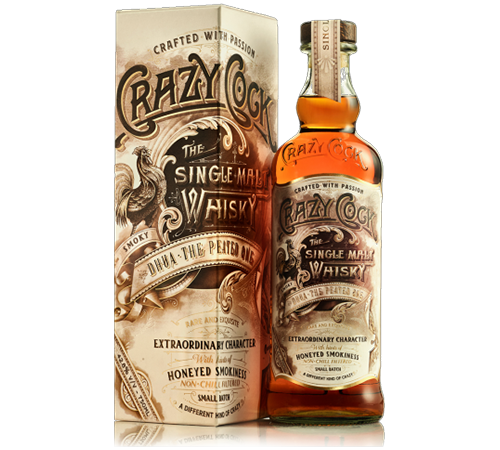
Crazy Cock Dhua is one of the best smoky whiskies you’ll find in India today. It’s rich, layered, and gives serious Islay vibes—with an Indian soul.
Mass-produced blends often lose nuance. That’s why small batch production is a marker of quality. It means fewer barrels, more attention to detail, and better consistency in flavor.
Why small batch matters:
Crazy Cock is built on this philosophy. Each bottle is a result of careful craft—not mass scale.
Consumers are getting smarter—and pickier. So sustainability is no longer optional, even in the whisky world.
How Crazy Cock is doing it right:
It's a sign that quality doesn’t have to come at the planet’s expense.
India’s top whiskies aren’t just winning hearts at home—they’re winning big abroad too.
You’ll find Indian single malts—Crazy Cock included—featured at:
Indian whisky isn’t just catching up—it’s leading the charge in many ways.
So, what separates a good whisky from a forgettable one? In India, it comes down to a few core things:
Brands like Crazy Cock Single Malt Whisky are proving that India can go toe-to-toe with the best in the world—and win.
Crazy Cock Rare – Double oak-aged with a refined balance of flavor
Crazy Cock Dhua – Bold, smoky, and packed with complexity
Tried one you love? Got one on your wish list? Let us know in the comments.
Q. What makes a whisky “good quality” in India?
Good whisky shows clean aromas, balanced flavours, and a smooth finish. It also depends on ingredients, distillation, barrel-aging, and how well the flavours come together.
Q. Can Indian whisky match imported whisky?
Yes. Indian single malts have improved massively. Many brands now use proper malted barley, good barrels, and better aging practices, giving results that hold their own internationally.
Q. Does India’s climate affect whisky quality?
A lot. Warm ageing speeds up flavour extraction from barrels. The result is deeper character in fewer years compared to whisky from cooler regions.
Q. Is expensive whisky always better?
Not really. Higher prices often reflect branding, import duties, or aging claims. Plenty of mid-range Indian single malts offer excellent flavour and value.
Q. How do I judge a whisky bottle before buying?
Look for details like 100% malted barley, age or cask information, distillery reputation, and awards. Reading tasting notes helps too.