-
Heritage Edition
-
Media
Indian whisky has moved past the phase of playing it safe.
For a long time, “smooth” was the goal. Easy to drink, easy to sell. But the global palate has shifted — and so has India’s. Today, the conversation is about character: smoke, depth, texture, and experimentation, reflecting India’s evolving premium single malt category.
What you’re seeing now isn’t just growth. It’s confidence.
Smooth whisky still has its place. But it’s no longer the benchmark of quality.
Drinkers — especially those exploring single malts — are looking for:
This shift is pushing distillers to go beyond safe profiles.
Instead of asking “Is it easy to drink?”, the better question now is:
“Does it say
something?”
That’s where bold Indian single malts are carving space — not by being universally liked, but by being memorable.
Smoke in whisky doesn’t come from the barrel. It starts much earlier.
During malting, barley is dried. If peat (partially decayed organic matter) is used as fuel, it releases phenolic compounds that cling to the grain. These compounds carry through distillation and show up as smoky, earthy, sometimes medicinal notes in the final spirit.
Key factors that influence smokiness:
But here’s the interesting part — Indian distillers aren’t bound by traditional peat sources or methods.
They’re experimenting.
Smoke doesn’t have to mean copying Scotch. It can be reinterpreted.
There are a few forces driving this wave of experimentation:
India’s climate accelerates aging, which means distillers can test and refine ideas faster. What takes years elsewhere can evolve more quickly here.
Unlike older whisky regions, India isn’t locked into centuries of rigid rules. That allows:
Indian drinkers today are more exposed than ever. They’ve tasted Scotch, bourbon, Japanese whisky — and now they want something different.
That demand is pushing brands to take risks.
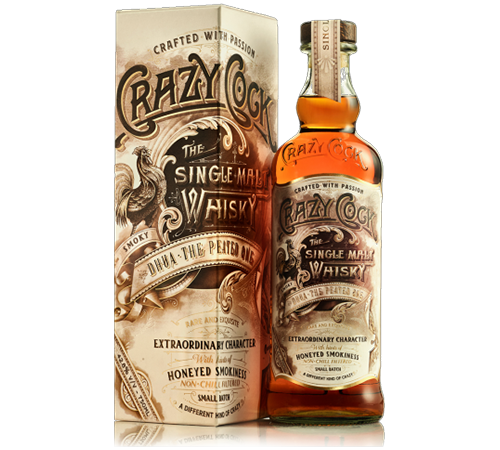
This is where Crazy Cock Dhua becomes relevant.
It doesn’t treat smoke as a gimmick. It treats it as structure.
Dhua leans into:
Instead of going aggressively peated, it strikes a balance:
smoke as a layer, not the entire story.
That makes it approachable for someone new to smoky whisky, while still interesting for someone who’s had heavily peated expressions before.
In a market where “smoky” often means “extreme,” Dhua plays a smarter game.

To really understand the direction of Indian single malt, it helps to look at contrast.
Together, they show two distinct philosophies:
Neither is better. They serve different moods, different moments.
But the real takeaway is this — Indian brands are no longer making one-dimensional products. They’re building portfolios with intent.
It refers to whisky made using malted barley dried over peat fires, which imparts smoky, earthy flavors.
Not necessarily in alcohol content, but it often feels more intense because of the flavor compounds.
No. It’s better described as moderately smoky, focusing on balance rather than overpowering intensity.
Rare is generally more approachable. Dhua is better if you’re curious about smoky or complex profiles.
Because the market allows it — fewer legacy restrictions, faster maturation cycles, and a growing audience that values originality.