Crazy Cock

How Distillers Create Balance in Indian Single Malt Whisky

Home / Blog / How Distillers Create Balance in Indian Single Malt Whisky
Posted on 11 June 2026

How Distillers Create Balance in Indian Single Malt Whisky

Introduction: The Art Behind Balance

Balance is one of the most important qualities in a well-crafted single malt whisky. It is what makes a whisky feel complete—where no single element overpowers another, and every component works together in harmony.

In Indian single malt, achieving balance is not accidental. It is the result of deliberate decisions made at every stage of production. From raw materials to maturation and final blending within a single malt, distillers carefully shape the spirit to ensure consistency, structure, and depth.

Understanding how balance is created reveals the craftsmanship behind every bottle of single malt whiskey.

What Does Balance Mean in Whisky?

A Harmonious Profile

Balance in single malt refers to:

  • Integration of flavours
  • Even distribution of intensity
  • Smooth transitions between notes

No Dominant Element

In a balanced single malt whisky, no single characteristic—such as wood, alcohol, or sweetness—overwhelms the others.

Also Read Non-Chill Filtered Whisky Explained

The Role of Raw Materials

Influence of Barley

The foundation of Indian single malt begins with barley, which contributes:

  • Base flavour
  • Texture
  • Structural consistency

Water Quality

Water used in single malt whiskey production impacts:

  • Fermentation
  • Mouthfeel
  • Overall clarity

Fermentation and Flavor Development

Controlled Fermentation

During fermentation, distillers influence single malt whisky by:

  • Managing yeast activity
  • Controlling duration
  • Monitoring temperature

Building Complexity

This stage helps single malt develop:

  • Fruity notes
  • Base character
  • Early structure

Distillation and Precision

Separation of Components

Distillation allows producers of Indian single malt to:

  • Separate desirable compounds
  • Remove impurities
  • Define the spirit’s core profile

Timing Cuts

The “cuts” made during distillation determine how single malt whisky:

  • Balances strength and smoothness
  • Retains desirable flavours
  • Avoids harsh elements

The Influence of Casks

Wood Interaction

Casks play a major role in shaping single malt whiskey by:

  • Adding flavour compounds
  • Influencing colour
  • Enhancing structure

Managing Cask Impact

For Indian single malt, distillers ensure:

  • Wood does not overpower the spirit
  • Flavours integrate smoothly
  • Balance is maintained over time

Combining Casks Within a Single Malt

Internal Blending

Even within a single malt whisky, balance is often achieved by:

  • Combining different casks
  • Selecting complementary profiles
  • Adjusting proportions carefully

Achieving Consistency

This process ensures single malt:

  • Maintains a stable profile
  • Reduces variation
  • Delivers a consistent experience

Also Read How to Host an Indian Single Malt Whisky Tasting at Home

Texture and Mouthfeel

Building Body

Balance in Indian single malt is not just about flavour—it also includes:

  • Weight
  • Texture
  • Mouthfeel

Smooth Integration

A well-balanced single malt whisky:

  • Feels cohesive
  • Flows smoothly
  • Avoids sharp or disjointed elements

Maturation and Time

Gradual Development

Over time, single malt whiskey:

  • Integrates flavours
  • Softens edges
  • Builds complexity

Monitoring Progress

Distillers of Indian single malt monitor maturation to ensure:
  • Balance is maintained
  • No element becomes dominant
  • The final profile remains cohesive
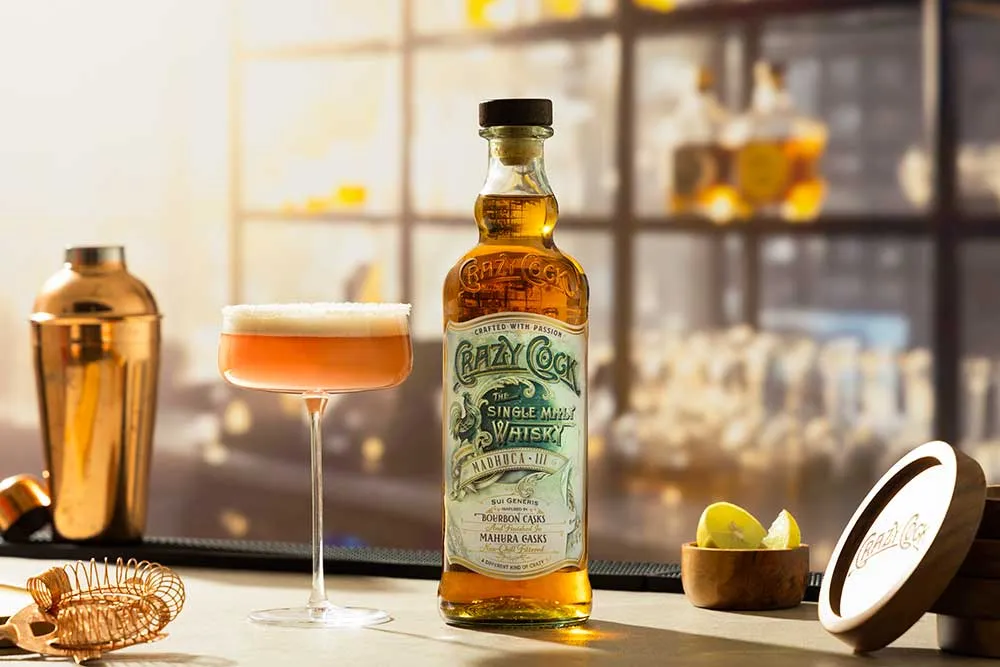
Crazy Cock - Indian single malt whisky
Crazy Cock Single Malt Whisky

Crazy Cock and the Craft of Balance

Structured Approach

Crazy Cock’s Indian single malt whisky reflects:

  • Controlled production processes
  • Careful cask selection
  • Defined flavour profiles

Expression Through Balance

With expressions like Madhuca I, Madhuca II, Madhuca III, Dhua, and Rare, the brand demonstrates how single malt can achieve harmony through precise craftsmanship.

Why Balance Matters to Consumers

Drinkability

Balanced single malt whisky is:

  • Easier to appreciate
  • More approachable
  • More enjoyable over time

Quality Indicator

For many, balance in single malt whiskey signals:

  • Skilled production
  • Attention to detail
  • Premium quality

Challenges in Creating Balance

Managing Variables

Producers of Indian single malt must balance:

  • Raw material variation
  • Environmental factors
  • Cask differences

Consistency Over Time

Maintaining balance across batches of single malt whisky requires:

  • Continuous monitoring
  • Careful selection
  • Precise adjustments

The Future of Balance in Indian Single Malt

Increasing Precision

As the category evolves, Indian single malt producers will:

  • Refine blending techniques
  • Improve process control
  • Enhance consistency

Greater Complexity

Future single malt whisky expressions may:

  • Offer layered profiles
  • Maintain harmony
  • Deliver refined experiences

Conclusion: Balance as Craftsmanship

Balance is at the heart of every great single malt whisky. It is not created by chance, but through careful decisions at every stage of production.

For Indian single malt, achieving balance means integrating flavour, texture, and structure into a cohesive whole. It reflects the skill of the distiller and the discipline of the process.

Because in the end, a truly great single malt whiskey is not defined by intensity alone—but by how well everything comes together.